

💡 Grant Writing Tip: Preparing for NIH’s Shift to the Common Form
NIH is requiring personnel documents for all submissions due May 8 and after to be created using the Common Form in SciENcv (NOT-OD-26-079). This affects proposals, RPPRs and JIT submissions. Details of the changes can be found in the original notice (NOT-OD-26-018). Please reach out to the PDS team at [email protected] for assistance.
For May 8, 2026, deadlines and beyond, NIH will be shifting to the Common Form for Biographical Sketches and Current and Pending Support documents and requiring these documents to be created in SciENcv. The shift will include significant changes to the content, format, and creation of these documents, so we are encouraging UC Davis investigators to prepare now for any upcoming NIH applications. Below are some of the key changes and our top tips (scroll down for links to our more comprehensive resources).
Creating the new biosketch
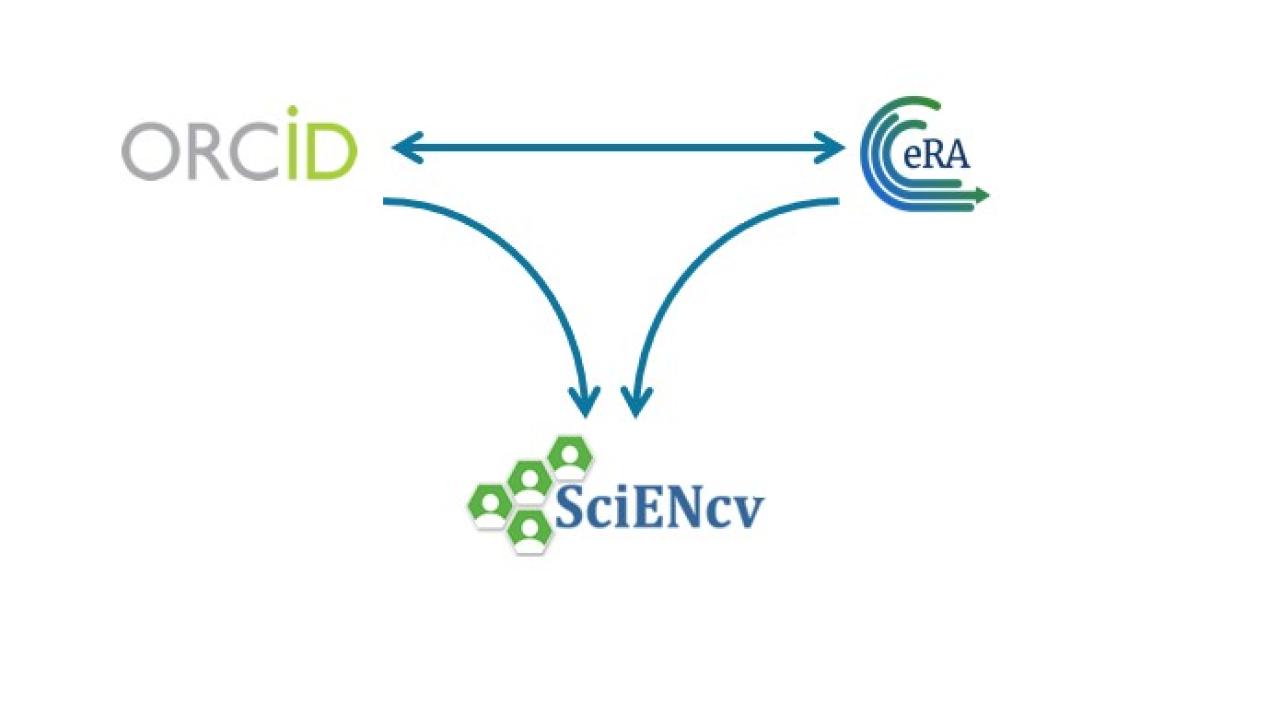
NIH applicants will now need ORCiD, eRA Commons, and SciENcv accounts. Accounts in these systems will need to be linked to the SciENcv account. Linking these accounts is often the biggest challenge, so be sure to set this up early.
Structure of the new personnel documents.
The new biosketch will include the Common Form (Professional Preparation, Appointments and Positions, and Products) and the Biographical Sketch Supplement (Personal Statement, Honors, and Contributions to Science). Both the Common Form and the Supplement must be created directly in SciENcv, which will generate a certified PDF that will be uploaded with your NIH application. The Current and Pending Support document will also be created in SciENcv, but using a different form.
Important changes to these sections include
- Products will be limited to 10 total (5 Products Closely Related to the Proposed Project that can be referenced in the Personal Statement, and 5 Other Significant Products that can be referenced in the Contributions to Science). No additional products can be discussed in the biosketch.
- MyBibliography link will no longer be allowed. A link to your ORCiD public profile will be the only external link, so you should populate your ORCiD profile with any information that you would like others to see. And be sure to set the visibility for each section in ORCiD accordingly depending on what you’d like visible.
- The Personal Statement and Contributions to Science sections can only be formatted using HTML code. Importantly, any HTML code will count against the 3500-character limit for the Personal Statement and the 2000-character limit for each Contribution to Science.
Resources
Our team has been busy developing resources to support our research community with the shift.
We developed two key reference documents to help everyone prepare for the new biosketches:
- A 4-page NIH SciENcv Tipsheet and Annotated Biosketch that covers the key elements of the new biosketch, and includes an annotated sample biosketch created in SciENcv.
- Our comprehensive SciENcv Reference Document that goes through the steps of setting up and connecting your ORCiD, eRA Commons, and SciENcv accounts, reviews the key changes to the format, content, and creation, and includes our ever-expanding FAQ.
- Recent Post by Sheryl Soucy-Lubell highlighting key info about the Common Form
- We are also holding workshop sessions where we walk through the steps to set-up and connect the necessary accounts, review changes to the personnel documents, and address common challenges, as well as drop-in sessions where we can help trouble-shoot and answer questions. For information on these sessions, please reach out to Stephanie at [email protected].